
So many of us spend our days living entirely from the neck up. Of course we find ourselves mentally scattered, frazzled, thinking in ten different directions and carrying an invisible weight of overwhelm.
I can see that weight of overwhelm, that stress stuck in the body when students arrive on their mats, and I know that bringing them into a passive, still Yin Yoga pose often doesn't work early on into the class. An overstimulated nervous system needs a bridge, like a gentle entry ramp that helps to transition from all that mental noise to coming down into a grounded, felt sense.
For me, this is the heart of why I teach Yin Yoga and Qigong: helping you become deeply rooted in the body, return home to yourself and notice the inner landscape unfold.
To bridge this gap, I love bringing somatic tools drawn directly from my Qigong practice into the Yin practice. These small practices such as gentle self-massage, acupressure and fluid micro-movements help soothe the nervous system, melt tension and can anchor us back into presence.
Here are the 3 Qigong-inspired somatic tools I frequently use in my Yin Yoga classes and personal practice:
1. Scalp Massage: "10 Dragons Run Through the Forest"
One tool I am particularly loving right now is a poetic Qigong self-massage exercise known as 10 Dragons Run Through the Forest. In this practice, your ten fingers act as the "dragons" running through the forest of your scalp.
How to Practice:
Position Your Hands: Place all ten fingertips (these are your ‘dragons’) along your front hairline, with your fingers slightly curved like rakes
Comb the scalp as you slowly drag your fingertips across the top of your head, through your hair and all the way down to the base of your neck
Release & Recycle: when your fingers reach the neck, flick your hands outward and visualize tossing away stress, brain fog or overthinking. Let it land on the earth so it can be recycled! Repeat this a few times.
How It Sits in a Yin Practice:
I use this either at the start or the end of class: You might add it before settling into a seated fold like Caterpillar or Butterfly, or at the end of the class, before you are about to close the practice.
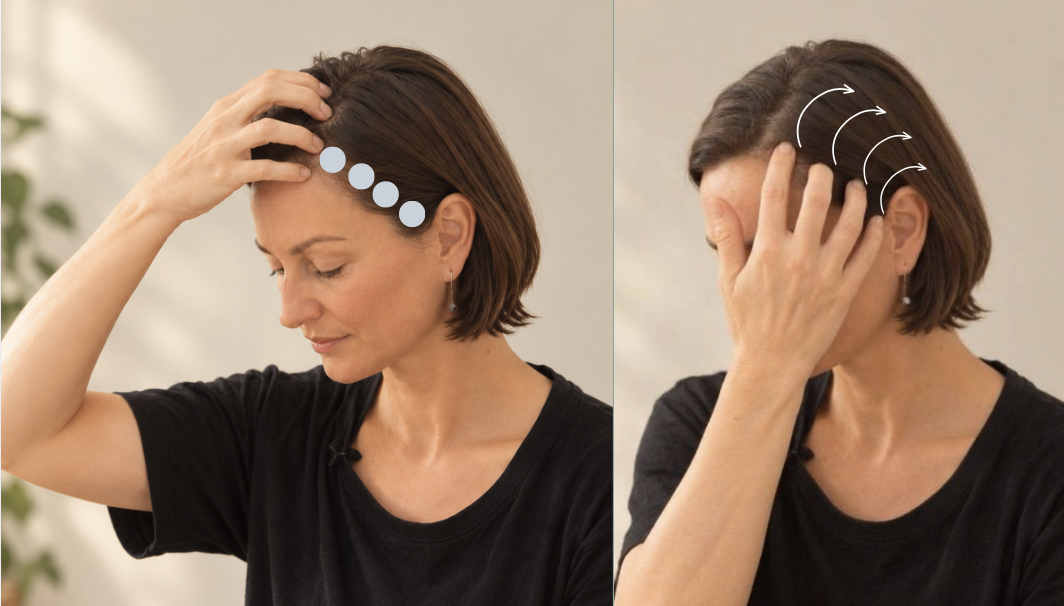
Benefits: it clears mental chatter and stimulates the dense fascial aponeurosis across the skull as well as the Yang meridians (Gallbladder and Bladder channels) running across the head.
2. Acupressure: Kidney-1 (Yongquan / Gushing Spring) for Grounding
Overthinking makes us feel top-heavy and ungrounded, so we need an energetic anchor to draw that scattered energy back down toward the earth. In Qigong, Kidney-1 (KD-1) is considered an important grounding point.
How to Locate & Apply:
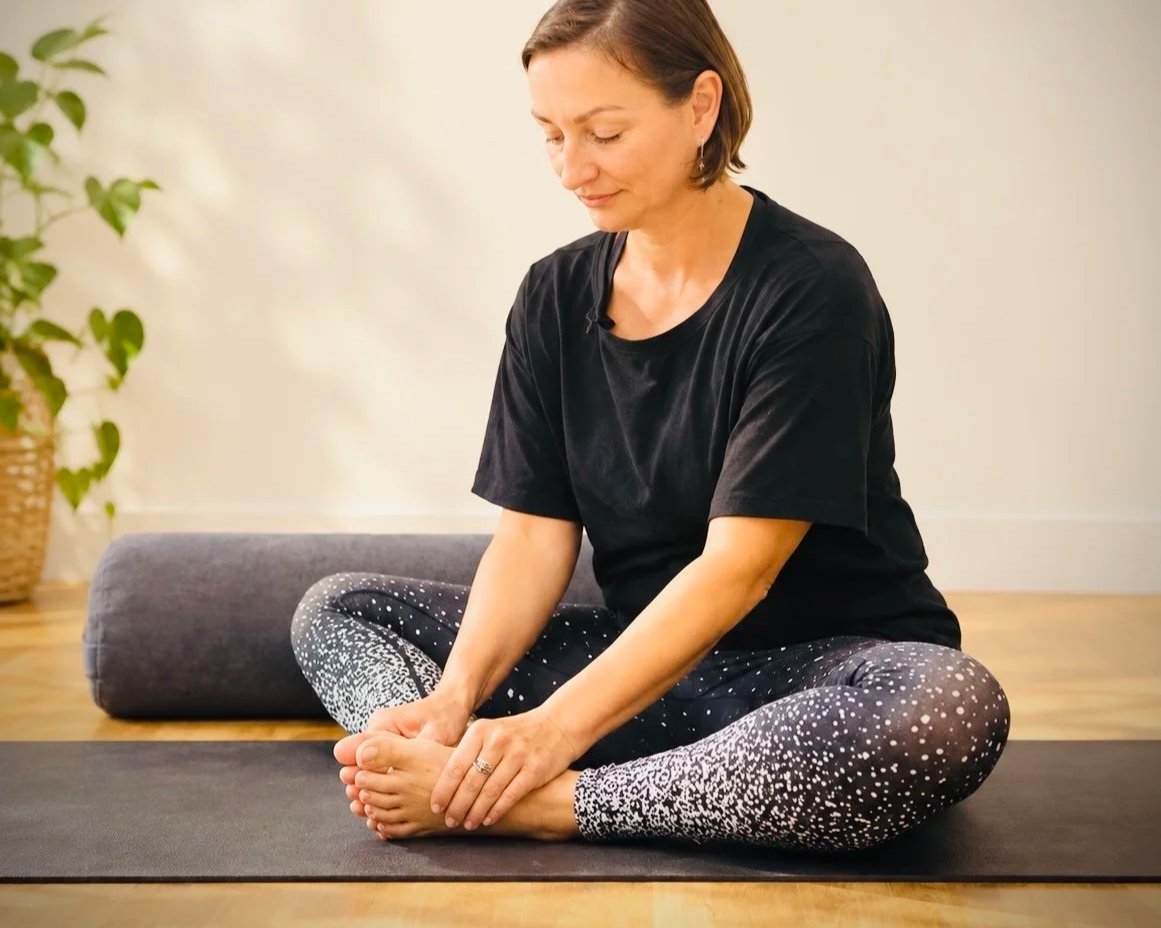
Location: Located on the sole of the foot, in the slight depression formed when you curl your toes (about one-third of the distance from the base of the toes to the heel).
Technique: In a seated position bring your thumbs onto the soles of your feet. After exploring the texture of the tissues, place your thumb onto KD-1 on each foot (OR use MFR: lean this point into a tennis ball as you are standing). Acupressure can be held for ~60 seconds while taking at least three gentle, effortless breaths.
How It Sits in a Yin Practice:
Energetic Down-Regulation: KD-1 is the lowest acupressure point on the body and the starting point of the Kidney Meridian (associated with the Water Element). Stimulating KD-1 before poses like Butterfly, Half Butterfly, Toe Tuck or Malasana/ Squat invites the energy to settle downward, anchoring attention down into the feet and earth.
3. Micro-Movement: Chin Circles for Delicate Neck Awareness
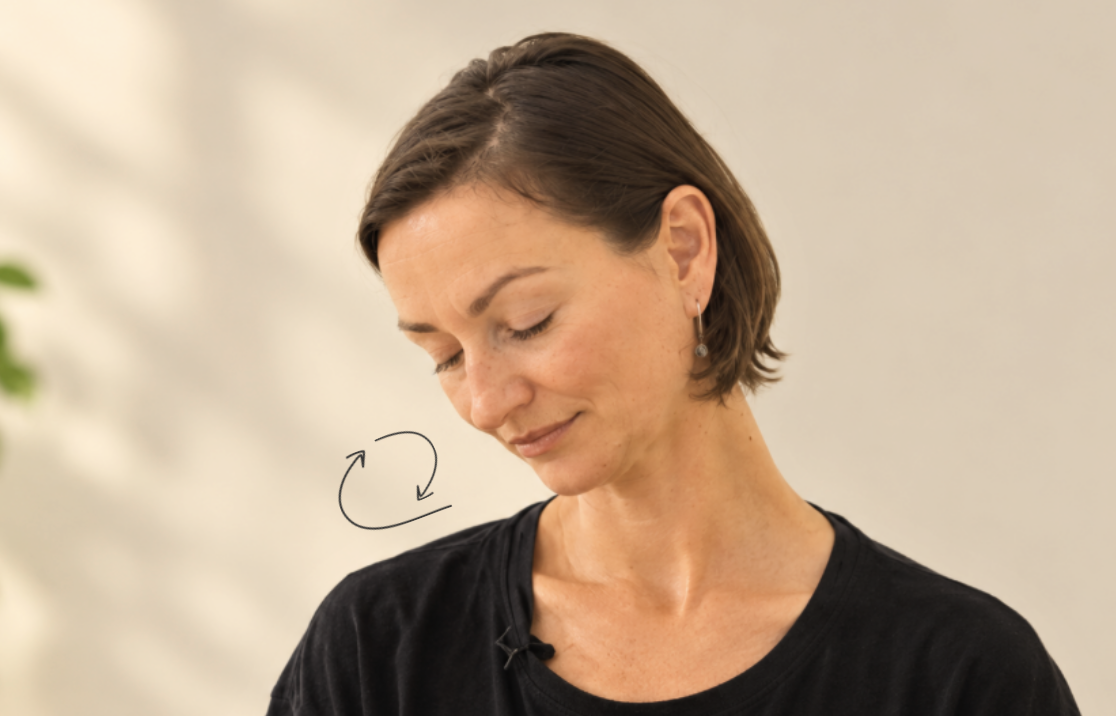
The neck and suboccipital area at the base of the skull hold an immense amount of unconscious tension from screening screens, driving and stress that is creeping up your back. Instead of forcing the delicate cervical spine into static rigidity, I bring gentle Chin Circles from my Qigong practice into Yin.
How to Practice:
Begin Softly: In a seated posture - and I prefer to sit in Seiza on top of two Yoga blocks- let your right ear lean over right shoulder. Give the weight of the head a moment to fully arrive, then bring your awareness to your chin.
Trace Small Circles: Imagine drawing slow, fluid circles into the space on your right side with your chin. These can be as small as you like, but effortless.
Explore Sensation: Notice how that feels in the opposite site of the neck. Feel the subtle gliding sensation of the skull on the neck - let the jaw relax.
How It Sits in a Yin Practice:
Sensory Exploration: Rather than "parking" the neck in a static posture where muscles might guard against gravity, chin circles introduce soft proprioceptive awareness. This micro-movement releases suboccipital tightness but more so makes you become present with sensation.
Returning Home to the Body
I weave these Qigong- inspired somatic tools into my Yin classes to invite my students to slowly drop into the body, the felt sense and prepare them for the quieter moments of Yin Yoga. I find that stillness is then no longer something they have to endure, it becomes that natural destination when the body feels safe and deeply present.
You might know one or all of these tools, no matter what: try it for yourself and let me know if you would add this into your Yin practice.
Next time when you feel light-headed or stuck in the overthinking loop, use these somatic tools as a bridge to come back to the body.