

About Simone
Melbourne based Yoga & Qigong teacher, Medical researcher and Shiatsu practitioner
How I found Yoga
Years ago, I lived in a fast-paced, career-driven headspace, collecting degrees, speaking at conferences, often rushed and quick at anger. Everything changed when a friend took me to a Yoga class. I was skeptical at first, almost turning around and left when I saw the teacher sitting on a piece of sheep skin in Lotus -but I stayed. And after the initial reluctance, I experienced Shavasana: a deep sense of ease, a glimpse of calm beneath the stress. It was my first step into the internal, receptive world of Yin, back into the body.
Drawn by this feeling, I continued exploring various styles of Yoga until I eventually enrolled in a teacher training- not with the intention to teach, but to learn more. And of course, I began to teach in 2012.
The Taoist lens on life
My path deepened further through embracing the wisdom of Traditional Chinese Medicine. From forest Qigong practices in northern Germany to my first acupuncture treatment, I became fascinated by a system of health that felt unfamiliar to my biomedical world view, but so nourishing. Studying Zen & Thai Shiatsu and medical Qigong opened a new perspective on mental-emotional balance and physical wellbeing.
Today, Yin Yoga and Qigong are my anchor to stay balanced. Alongside my demanding work in medical research, these practices support me in living with more clarity, balance and intention and this is what I love to share in my classes.
I am trained in somatic Yoga, Yin Yoga, Yoga Nidra meditation, myofascial release, Zen (Thai) Shiatsu and Qigong
Soma-Chi Yoga (200hours) | Yin Yoga (50hours) | Yoga Nidra meditation, Amrit lineage (100hours) | Prenatal Yoga (25hours) | Female Health for Yoga (25hours) | Myofascial Release (55hours) | Zen-Shiatsu (1 year) | Zen Thai Shiatsu (20hours) | Qigong (20hours, 60hours) and ongoing...

What I teach and my approach:
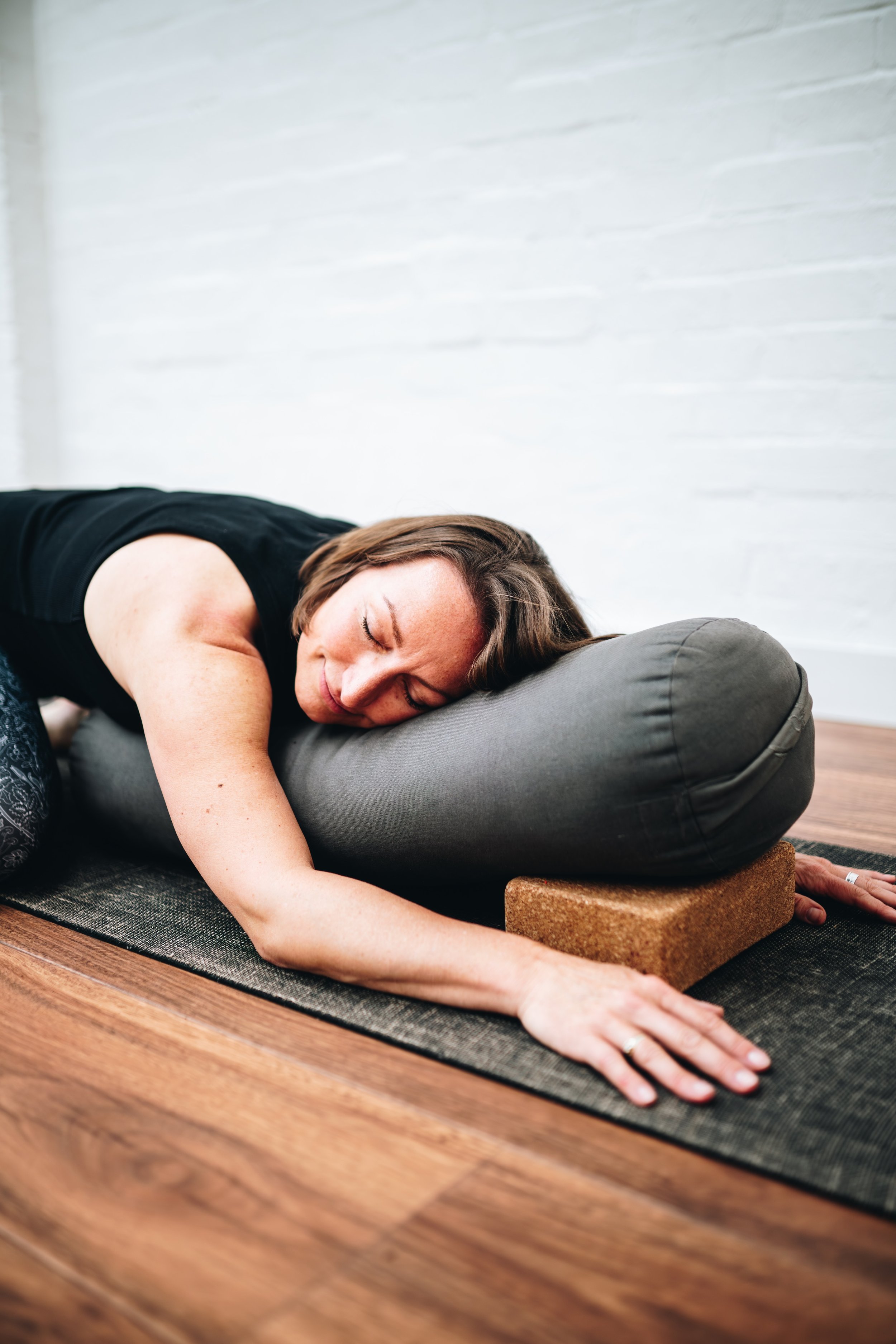
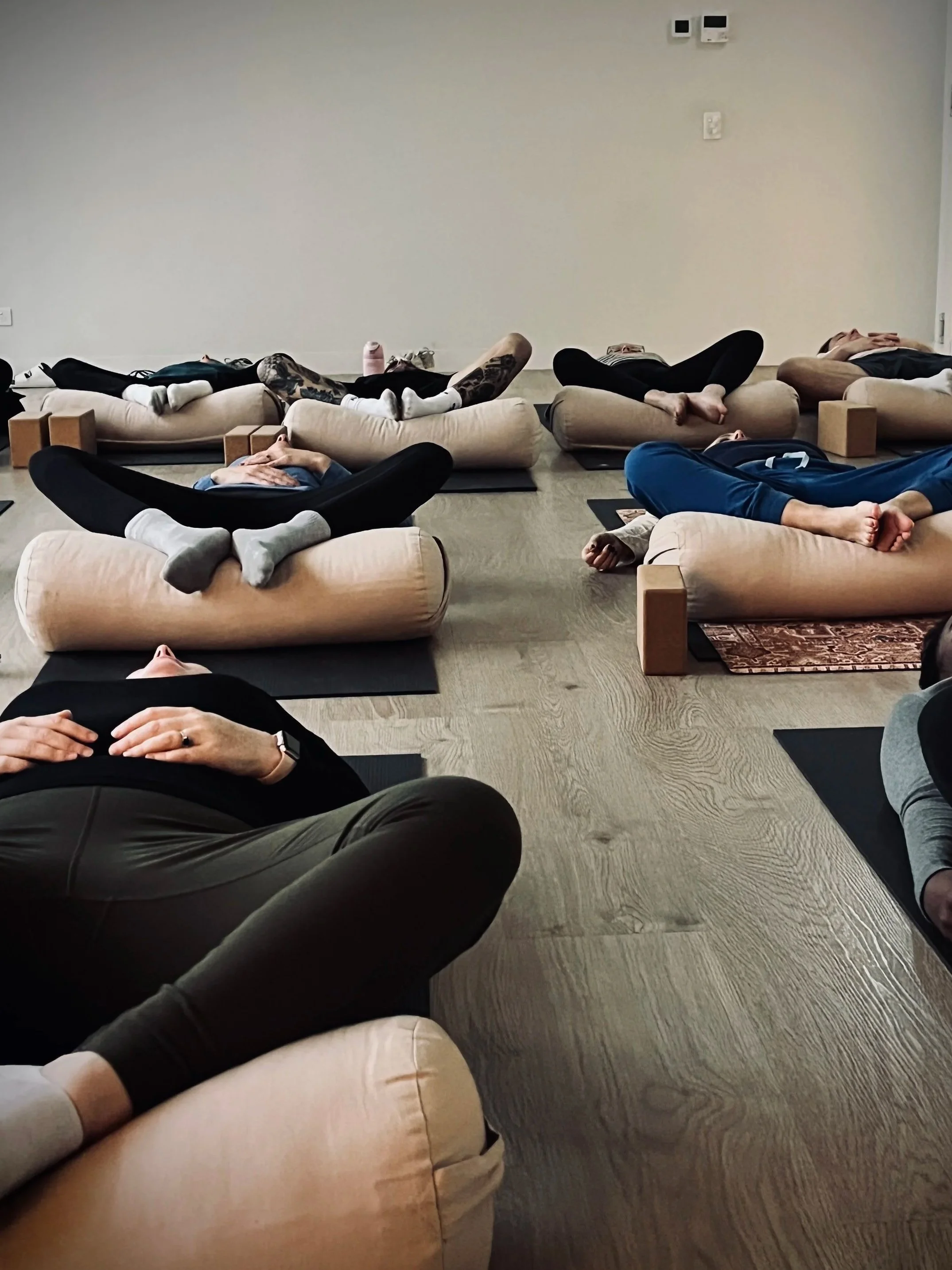
My Yin Yoga classes offer a grounding, nourishing experience: soothing your nervous system while guiding you back home to yourself.
I integrate somatic exploration, (acupressure)-massage or myofascial release tools into a Yin class for you to listen to your body, explore how it feels and release tension. The practice works on the denser tissues of the body, hydrating the myofascia and gently stimulating the energy flow to settle. With patience and enquiry, the parasympathetic branch of the nervous system is accessed and the practice becomes a journey back to yourself.
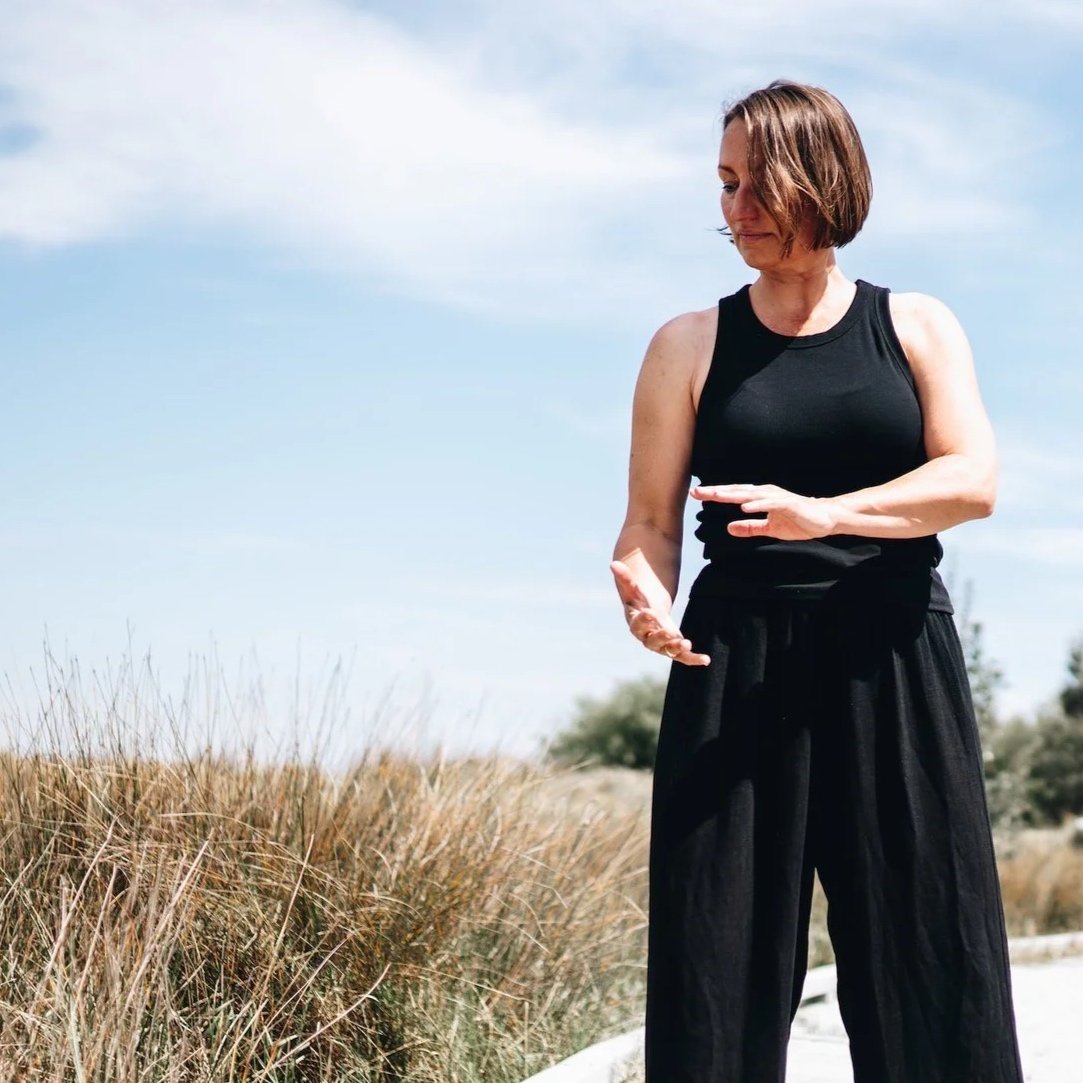
My Qigong classes combine mindful and intentional movement to release tension and invite harmonious Qi flow.
My interpretation of Qigong is suited to our contemporary lifestyle and I draw from Daoist principles and wisdom from Oriental medicine. You can expect to learn basics such as standing forms, tapping meridian lines, acupressure and intentional movement to open the Huang (= fascial lines, connective tissues) for the Qi to flow, with intentional gentle movement for focus and cultivating energy awareness. I love to teach/ practice Qigong outside.
Teaching Schedule in Melbourne:
Wellness Zone MSAC, Albert Park
Mondays, 6pm Slow Flow
Mondays, 7pm Yin Yoga
Wednesdays, 7pm Yin Yoga by Candlelight
Sundays, 4pm Yin Yoga + mindfulness
Recurring WORKSHOPS IN MELBOURNE
Qi Circle
Explore your life force Qi through gentle movement, tapping and Yin
Qi Circle combines the flowing movements of Qigong, the stillness of Yin Yoga and the gentle touch of acupressure to help release tension, improve mobility and create balance.
Rooted in the principles of Traditional Chinese Medicine, each workshop introduces one of the Five Elements and explores how it relates to the rhythms of nature, our physical body, our emotions and our energy.
Myo- Yin Yoga
What happens when we bring fascia into the Yin practice?
In Myo-Yin, we explore the science of fascia alongside the wisdom of TCM and the body’s myofascial meridians. You’ll learn how to use simple myofascial release techniques within a Yin Yoga setting to ease stiffness and tension, invite greater freedom of movement and support a calmer nervous system.
Working with the fascial body can add another layer of depth to your practice and help you create more nourishing and sensory Yin experiences for yourself and your students.