
How to Weave TCM Into Yin Yoga: Less Theory, More Experience
The wisdom of Traditional Chinese Medicine fascinates me (and I am probably not alone here).
It offers a very different lens on health and wellbeing from the Western biomedical system many of us have grown up with. And as Yin Yoga teachers, it can open up another layer of understanding when we bring some of these concepts into our teaching.
But how do we do this without making our Yin classes feel like a TCM lecture? And also not to confuse our students by meridian name dropping.
I don't think there is one right way to teach TCM in Yin Yoga. And I certainly don't think you need to include it at all, because Yin Yoga can speak for itself.
But if you are curious about weaving TCM into your classes, I've found that one principle helps me again and again:
Less theory. More experience.
The TCM system is vast. We have Yin-Yang theory, the Five Elements, meridians, seasons, emotions, acupressure and so much more that requires and deserves years of study.
And that's the reminder:
You don't need to fit the whole system into a 60-minute Yin class.
Instead, ask yourself:
What is one thread from this tradition that could support the experience I want to create for my students today?
1. Start with an experience, not a theory
Rather than beginning with:
“Today we're going to explore the Liver meridian which is associated with the Wood element…”
start with something your students can actually relate to.
The intention might be softening tension and frustration. Less rigidity, more flexibility.
What might that feel like in the body?
Perhaps we explore moving away from centre and returning. We sway or lean rather than pushing. We notice where we hold on too tight and where we can soften our grip.
You might choose poses such as Dragonfly or Bananasana, gentle movements and perhaps an acupressure point such as Liver 3 - because you know they all stimulate the tissues along which we find the energetic pathways associated with the Wood element.
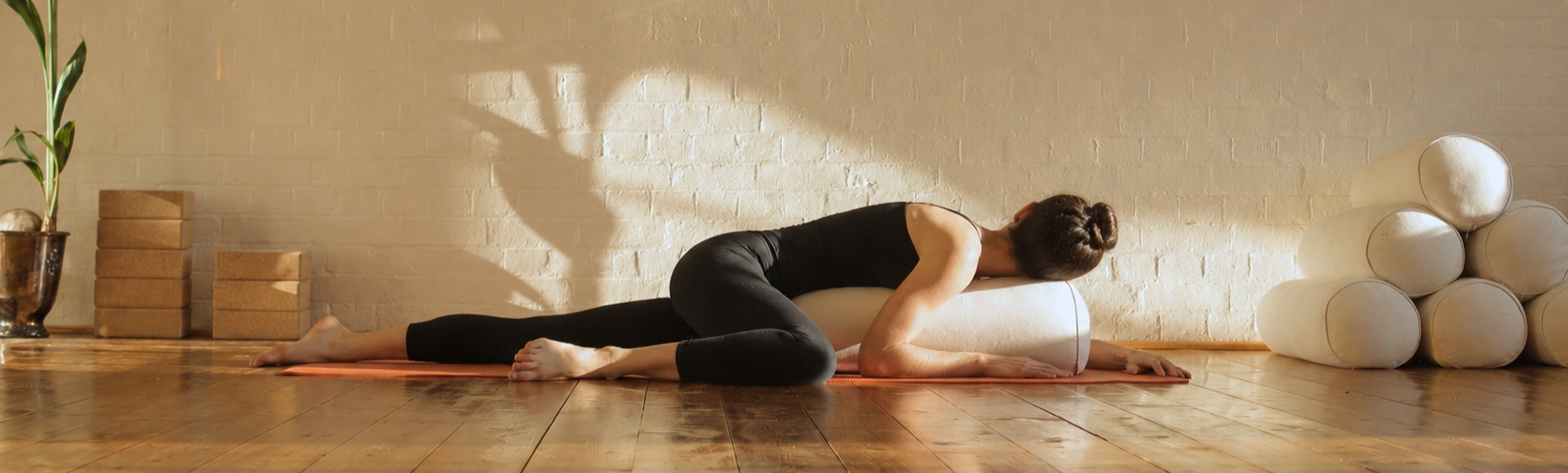
Your students don't necessarily need to know all the theory behind your choices.
They can experience the thread without needing to name it or intellectually grasp it.
2. Let your knowledge inform the class without putting all of it on the mat
This is something I've had to learn myself.
I love understanding mechanisms. I love researching. And I have spent years learning about fascia, TCM, acupressure and the nervous system.
My instinct can therefore be to explain.
But I've realised that my students don't need to know everything I know.
Instead of explaining:
“The Liver is associated with the Wood element, the smooth flow of Qi and emotions such as frustration and anger…”
you might simply say:
“Sometimes inner tension can show up as irritability or restlessness. Today, let's explore what happens when we create a little more space around that tension.”
The theory remains in your toolkit as the teacher, and you don't have to empty the entire toolkit onto your students.
3. Use touch to make TCM tangible
This is one of the reasons I love to integrate acupressure in Yin Yoga.
Give students something concrete to explore, like acupressure.
If we stay with the Wood element, a great point to introduce is Liver-3 in the webbing between big and second toe.
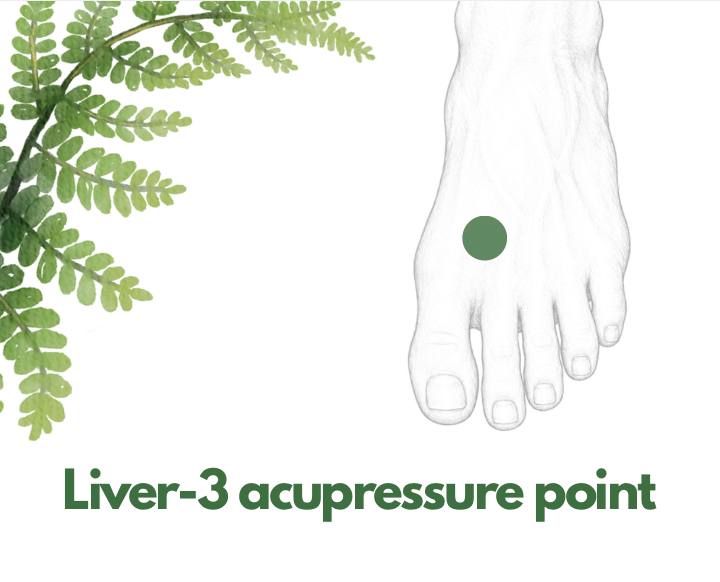
Invite them to find the area, gently massage it and notice the texture beneath their fingers. What do they feel? Is one side different from the other? What happens when they soften their pressure?
Now we make this an experience, TCM isn't just theory anymore. We can say a few words about the effect, for example: this gentle acupressure massage helps ease tension and frustration.
And that experience can then become part of the Yin practice.
4. Build a thread rather than trying to teach a whole system
One class is rarely enough to introduce something as rich as TCM in any meaningful depth, that’s okay.
You don't need your students to understand the Five Elements after one class. Instead, you might explore one theme over several weeks - or over a season which I find works well.
You might return to the Liver and the qualities of movement, flexibility and ease. Each week you approach the theme slightly differently: through a pose, an acupressure point, a visualisation or a different quality of attention.
This repetition creates familiarity.
The concept can gradually become something your students recognise and experience, rather than something they were briefly introduced to in a long explanation. Speak in images, not just explanations
And this is another tool I find incredibly useful when bringing TCM into Yin Yoga: using metaphors.
TCM concepts can be difficult to translate directly into modern language. And sometimes explaining them intellectually can pull students out of the very experience we are trying to create and they start the thinking process again.
Instead of explaining the smooth flow of Liver Qi, you might invite students to imagine:
A river that has been dammed for a long time. What happens when the water finally has somewhere to move, to flow?
You don't need to use TCM vocabulary for your students to experience the quality you're trying to evoke.
A well-chosen image can sometimes do more than a paragraph of theory. Your students don't need to know everything you're teaching. This has probably been one of my biggest lessons as a teacher.
The deeper my own knowledge has become, the more I've realised that good teaching isn't necessarily about passing on more information.
It's about choosing what is useful and relevant and put it into words that help your students feel rather than think.
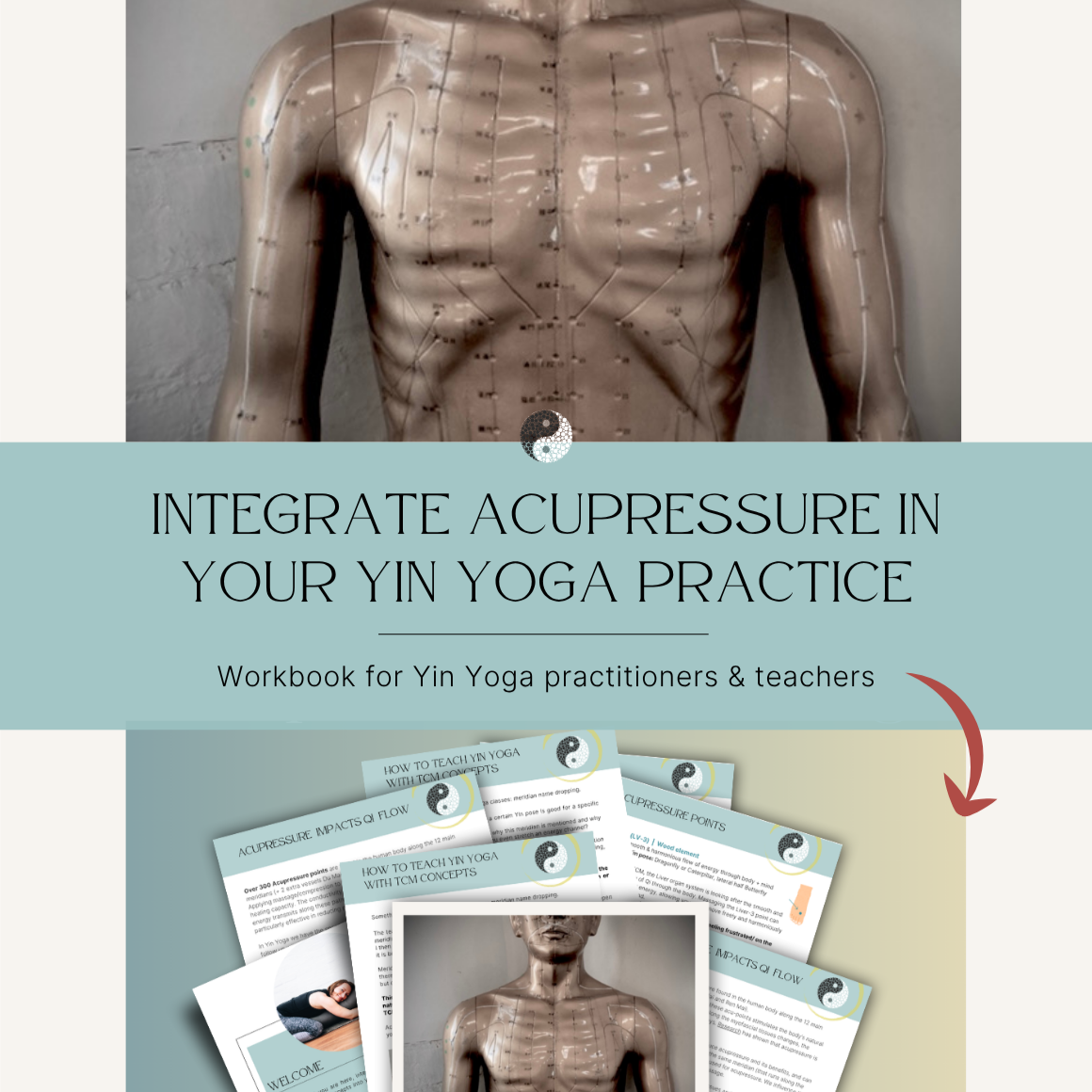
In my free Workbook ‘Integrate Acupressure in your Yin Yoga practice’, I show you concrete, easy-to-apply points you can weave into your existing sequences right away, without getting lost in the theory.
👉 Start using Acupressure in Yin
Let me know what you think about teaching these rich TCM concepts in Yin Yoga, what works well for you and your students?
Best, Simone