Fire Element Wisdom for Yin Yoga
A Traditional Chinese Medicine reflection for Yin Yogis and Yin teachers, offering nuggets of wisdom to support class theming, self-reflection and heart-led teaching.
In Traditional Chinese Medicine (TCM), the Fire element is the spark that allows us to truly meet ourselves, others and life with warmth, authenticity and presence. Fire is the radiance of who we are when we feel safe enough to be seen. It is the glow of authentic expression, the joy of connection, and the quiet contentment that comes from living in alignment with our heart.

Fire is the season of maturity and expansion
Fire corresponds to summer and mirrors the life phase between the ages of 20–40, when we mature into adulthood. This is a time when growth shifts from external development into deepening relationships, your purpose and meaningful contribution. The energy of fire moves up and outward, it expands.
Just as a flower opens fully in summer and unapologetically expresses its colors, Fire invites us into full expression of our authentic self. When we can see all aspects of ourselves with acceptance and in peace, there is no need to hide anything- in fact there is a willingness to be seen as we truly are.
Reflection prompts:
Can I listen to my heart’s intuition without immediately seeking external advice?
What does authentic expression feel like in my body?
In this regard, a balanced Fire element means we feel content and connected to our truth. We don’t compare ourselves and try to do it their way.
The organ systems associated with the Fire element are Heart & Small Intestine and Pericardium & Triple Heater. As the Heart plays a major role as the ruler of all other organs, I will focus on some interesting and inspiring wisdom of the Heart in this exploration.
The Heart-Mind: Xin 心
In Chinese medicine, the Heart is far more than a physical organ. It is known as the Emperor, the ruler of all other organ systems.
In Western biomedicine there is still that split between logic or intellect (mind) and emotion (heart), but Chinese medicine sees them as one unified ‘center’ called Xin (心) which describes the heart-mind. In this understanding, the Heart is the seat of consciousness, intelligence, emotional clarity and wisdom. For the heart to see clearly, it needs space.
Heart energy in balance: mental clarity, good memory & clear speech.
Heart energy disturbed: confusion, agitation or forgetfulness.
Shen is the Spirit of the Heart
The Shen is the spirit or consciousness that resides in the Heart. It is said that during the day, Shen wanders: it explores, learns, connects and expresses itself. At night, Shen returns inward so we can rest and sleep. If the Shen can’t settle back into the heart space, sleep issues arise.
For the spirit of the Heart to feel at home, it needs:
Connection: meaningful interaction, warmth and relationship
Retreat: stillness, quiet, introspection
Too much outward stimulation scatters Shen, too much withdrawal dims its light. A harmonious Fire teaches us to keep balance between too much (social) stimulation and solitude.
Reflection prompt:
· Where do I crave more connection and where do I need more retreat?
· When do I consciously take time to be quiet, so I can listen to the whispers of my heart?
The Small Intestine: Discernment & Assimilation
The Yang organ Small Intestine is the ‘personal assistant’ to the Heart and responsible for separating the pure from the impure, both physically and metaphorically. It is assisting the heart in sifting through what is of value and what not.
It governs our ability to:
Absorb what nourishes us & to let go of what does not serve
Discern truth from noise
This applies not only to food, but also to information ( Hello information overload !! ), emotions and beliefs.
Relationships & the Inner Home
The Heart space is where all relationships are born, including the most important one: the relationship with yourself.
True connection with others is only possible when we have learned how to relate to:
Our inner critic
Our emotional landscape
Our shadows and vulnerabilities
Inner peace creates the conditions for outer harmony. Without it, relationships may feel strained, performative, or draining.
Fire also teaches us about healthy boundaries: giving warmth without self-abandonment, openness without overexposure. This is the role of the Pericardium, the heart protector which is the second Yin organ associated to the Fire element.
Reflection prompts:
· How do I relate to myself when no one else is watching?
· When do my relationships feel nourishing rather than draining?
· Where might I be seeking connection outside before tending to my own inner needs?
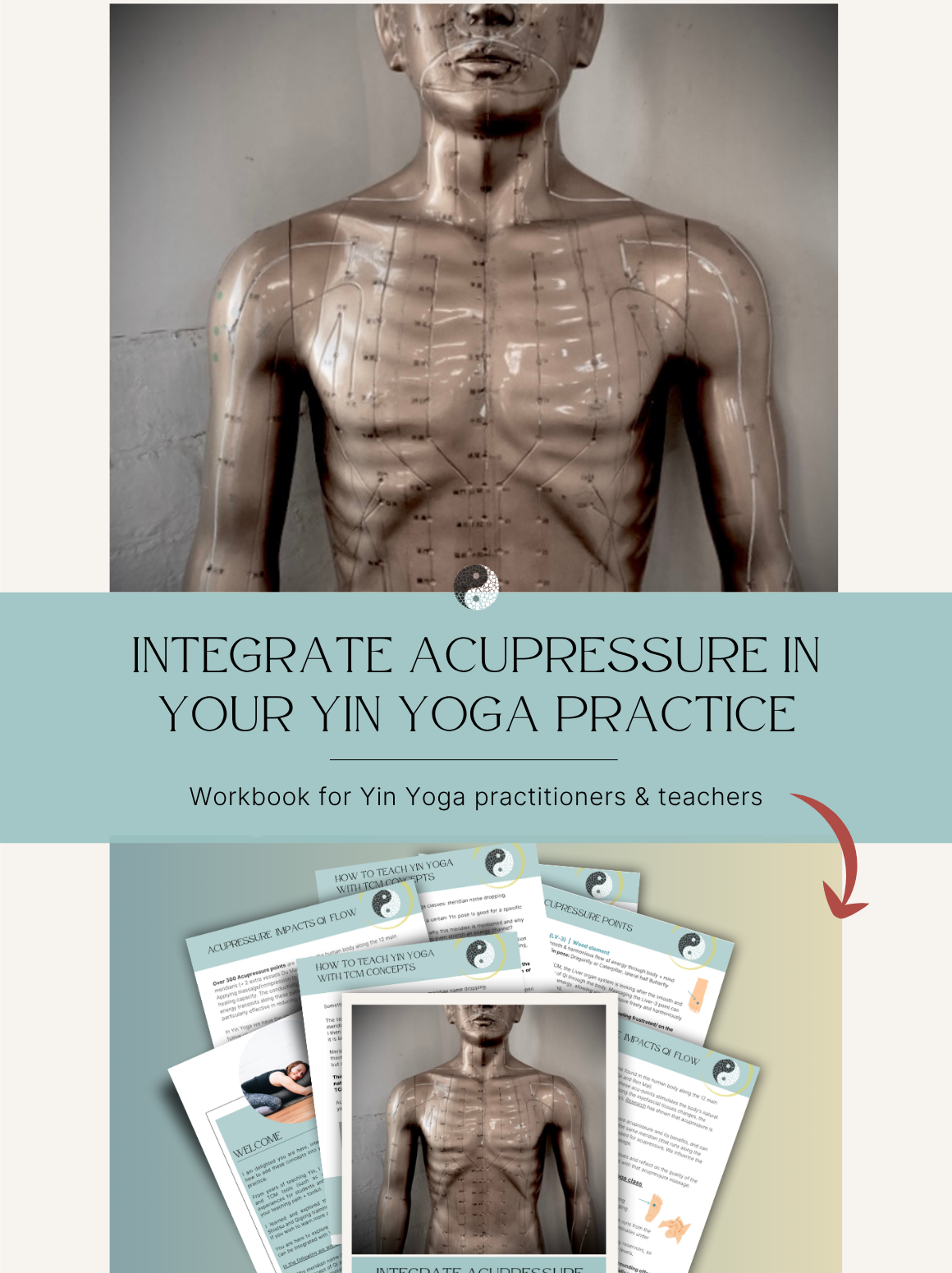
Free Workbook: Acupressure for Yin Yoga
Add another layer to your Yin practice & integrate acupressure to guide Qi awareness.
I show you my three favorite acu-points HERE.
Using this TCHM tool in your classes can add another layer of reflection & inner listening.
Connect to your authentic truth in Yin Yoga
Fire is intimately connected to truth and authenticity. In Yin Yoga we have time and space to be with ourselves in moments of stillness. Here we can listen to the quiet whispers of our intuition, to what our heart holds. We can let go of seeking validation outside and consult the wisdom of our own heart first.
Remember: Authentic expression is not loud or dramatic; it is aligned with who you are.
The Heart needs space and retreat, in Yin Yoga we can allow that space to unfold to harmonise the Fire element within. A balanced Fire element allows us to:
Speak clearly and truthfully
Feel calm, steady and emotionally regulated
Experience lightness, joy and meaningful connection
Be fully ourselves without apology
Care for others without neglecting ourselves
Acupressure massage for the Fire Element
Rooted in Traditional Chinese Medicine, acupressure supports the smooth circulation of Qi through the meridians. Stimulating specific points along these pathways can help resolve energetic imbalances and create greater harmony within the body, mind, and spirit. You may explore these points in your personal practice or share them with students along with some reflection in a Yin Yoga class:
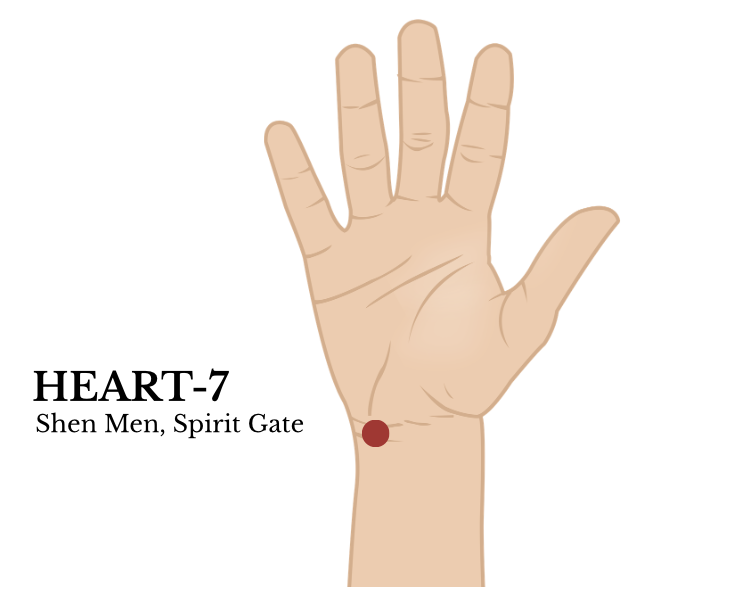
Heart 7 (Shenmen, Spirit Gate)
One of the major points of the Heart meridian, it is a gate or door to access your spirit/mind/emotion. It can help clam down the internal fire and helps with stress, anxiety and insomnia or sleep issues.
Located at the wrist crease, in line with the little finger between the ulna and the pisiform bones.
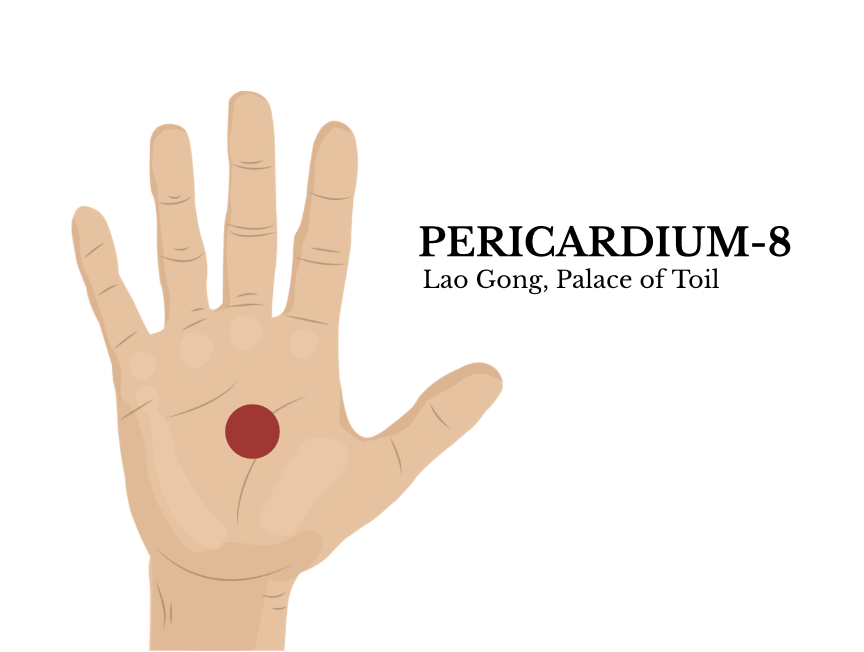
Pericardium 8 (LaoGong, Palace of Toil)
A key point in healing work and for sensing your Qi in Qigong. The Lao Gong is located at the center of the palm where the tip of the middle finger touches the palm when you make a fist.
Amongst its many functions, massaging PC-8 helps to calm a restless mind and eases anxiety, balancing the Fire element.
Closing Reflection
The Fire element reminds us that we are not meant to dim our light to belong. When the Heart is settled and Shen feels at home, our presence alone becomes nourishing.
Fire teaches us that radiance is not something we perform, it is something that naturally glows.
May your practice support you in coming home to your heart.
Best, Simone x