
Guiding principles of Myofascial Release: indirect before direct
One of the biggest misconceptions about myofascial release (MFR) is that more pressure leads to better results. In reality, our connective tissue responds best when we work with the body rather than trying to force a change.
Myofascial release is a great way to work with our myofascia, improve hydration and help the nervous system settle. It beautifully complements a Yin Yoga practice as both modalities work on similar tissues and apply the same approach: listen to explore.
So it is not about "breaking up knots" or pushing through discomfort, instead it’s about creating the right conditions for the tissues to soften, rehydrate and move with greater ease.
This also means recognising what the tissues are communicating and to discern when to apply MFR and when not.
When should we not use MFR directly on tissues
Not every area of discomfort needs more pressure. If tissue is bruised, acutely inflamed, recently injured or swollen, it's already responding to increased activity as part of the body's healing process. Applying sustained pressure or rolling directly over these tissues can not only increase discomfort but will place additional mechanical stress on an area that's already working hard to restore balance.
In these situations, our role isn't to force change but to support the body's own recovery.
This is where the MFR principle of indirect before direct becomes so valuable. Rather than focusing on the irritated tissue itself, we work with the surrounding tissues of the body to encourage release here. We know that the myofascial chains of the body are all interconnected, so if you place your MFR props further up or down that chain this will still benefit in releasing tension.
What might be helpful for the irritated tissues /area is gentle movement and the use of light, directional touch to create conditions for healthy lymphatic and circulatory function.
Supporting the Body's fluidic system
Our lymphatic system plays an essential role in clearing excess fluid, transporting immune cells and maintaining healthy tissue balance. Unlike our circulatory system, the lymphatic system doesn't have a pump like the heart. It relies on breathing, muscle contractions, body movement and the gentle movement of surrounding tissues to keep lymph flowing. The superficial layer of that lymphatic system lies just beneath the skin and is partly housed in the superficial fascia.
This is one reason why directional movement or gentle strokescan be so effective.
Case study: How to approach swollen legs after a long-haul flight
If you've ever stepped off a long-haul flight with puffy ankles and lower legs (like me on my last flight), you experienced a very common response to prolonged sitting.
During long periods of inactivity, the calf muscles which normally act as a "second heart" to help pump blood and lymph back towards the torso remain pretty inactive. Gravity encourages fluid to settle in the lower legs and the reduced cabin pressure plus dry air inside the aircraft contribute to dehydration and fluid shifts. This is triggering the water-retention system of the body and the swelling is called edema. [1] [2]
Although it can feel uncomfortable, this temporary swelling is a normal response for healthy travellers. Wearing compression socks can help and is also preventing blood clots.
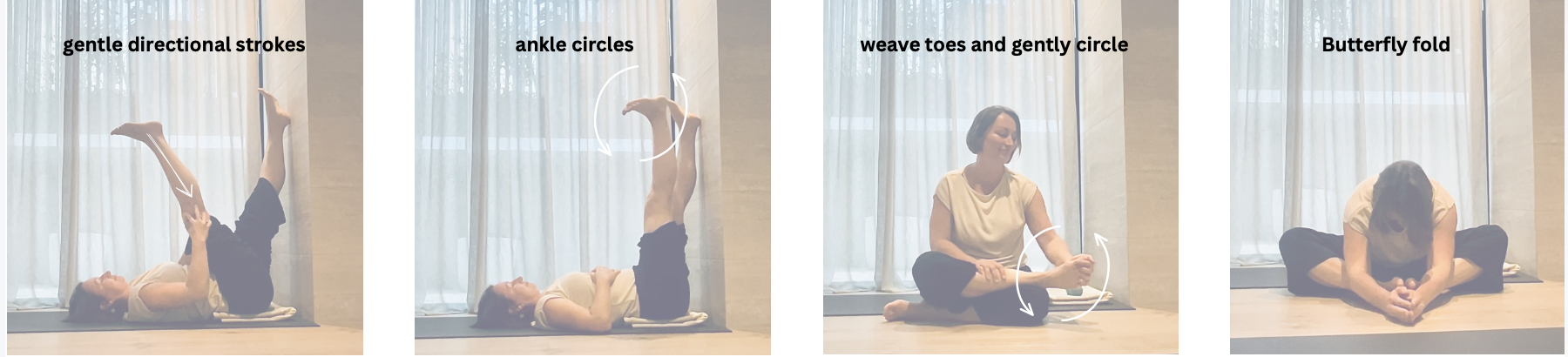
My Favourite Post-Flight Recovery Ritual
1. Walk before you unwind
Even five or ten minutes of walking helps reactivate the calf muscles, encouraging blood and lymph to return towards the heart. You can also stand and raise up onto tippy toes or march.
2. Use gentle directional self-massage
Using the palms of your hands, apply light, slow strokes from the feet towards the knees. Think of this as inviting movement rather than forcing it. The touch should feel soothing, not deep. You can do that reclinced with the legs lifted.
One thing I like to do is weave my fingers through the toes while seated. Then invite some gentle rotational movement into the feet, toes and ankle.
3. Save the massage balls for areas of compression
After many hours of sitting, the buttocks and back are often the areas that truly benefit from myofascial release.
Using MFR balls in these regions can help restore movement to the fascia, ease muscular tension and create a sense of spaciousness throughout the body.
Here I often place balls into the upper Trapezius, half way between neck and shoulders. For that one you recline, lift hips up on a bolster and pop the balls just under the rim of the upper trapezius. Lifting arms and play with the sensation of compression under your Traps.
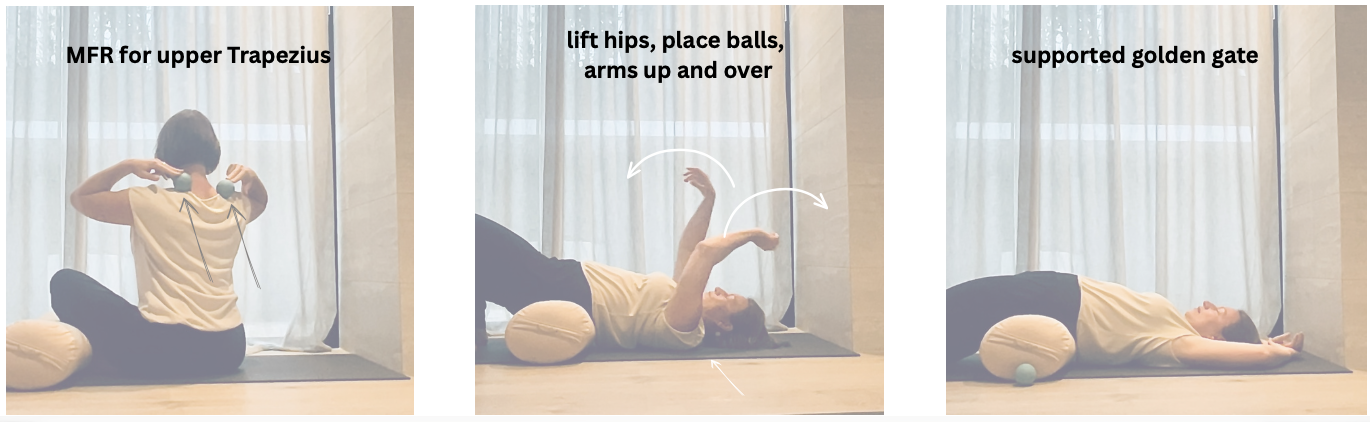
4. Complete your recovery with Yin Yoga
A nourishing Yin pose can feel wonderful and settle the nervous system and energy, I particularly enjoy:
Butterfly to soften the hips and inner legs (after a gentle massage of feet/ toe weave).
Deer Twist to gently restore movement through the gluteal muscles and hips after prolonged sitting.
Legs Up - either the Wall (Viparita Karani) or in space (called Waterfall) to elevate the legs, invite relaxation and soothe the nervous system.
Bottom line: healing or recalibrating doesn't always come from doing more. It comes from getting in touch with the body and recognizing what the tissues are communicating.
Simone x
References:
[1] Zubac D, Buoite Stella A, Morrison SA. Up in the Air: Evidence of Dehydration Risk and Long-Haul Flight on Athletic Performance. Nutrients. 2020 Aug 25;12(9):2574. doi: 10.3390/nu12092574
[2] Brown T.P., Shuker L.K., Rushton L., Warren F., Stevens J. The possible effects on health, comfort and safety of aircraft cabin environments. J. R. Soc. Promot. Health. 2001;121:177–184. doi: 10.1177/146642400112100315.