
The Bridge Between Fascia and Energy: MFR Meets Acupressure
As Yin Yoga practitioner and teacher, we love to work with structure and subtlety, fascia and Qi, tissue and energy. For me, these are not separate systems you need to balance, but a connected expression.
I combine elements of Shiatsu, medical Qigong and myofascial release to support a more balanced flow of energy through body-mind and to release tension and stagnation from the system: by working into the fascia.
A growing body of research suggests that fascia may be the bridge to do exactly that.
Fascia as a living container housing the Meridians
Fascia is now understood as a dynamic, communicative network found throughout the body. When viewed through the lens of Traditional Chinese Medicine (TCM), its role becomes even more intriguing:
Research studies by Dr. Helene Langevin [1] have shown that approximately 80% of acupuncture points correspond directly to muscular connective tissue planes. This suggests that what ancient traditions described as energetic pathways may have a tangible anatomical basis.
Similarly, Thomas Myers’ work on Anatomy Trains maps out myofascial tracks [2]. These longitudinal bands of connective tissue form functional, continuous units throughout the body and closely align with the major meridian lines of TCM.
Supporting this view, publications such as by Bai Y. [3] propose that the fascia network itself may be the physical substrate of the meridian system.
For us as Yin practitioners or teachers, this opens an interesting perspective: when we work with fascia, we may also be influencing the flow of energy.
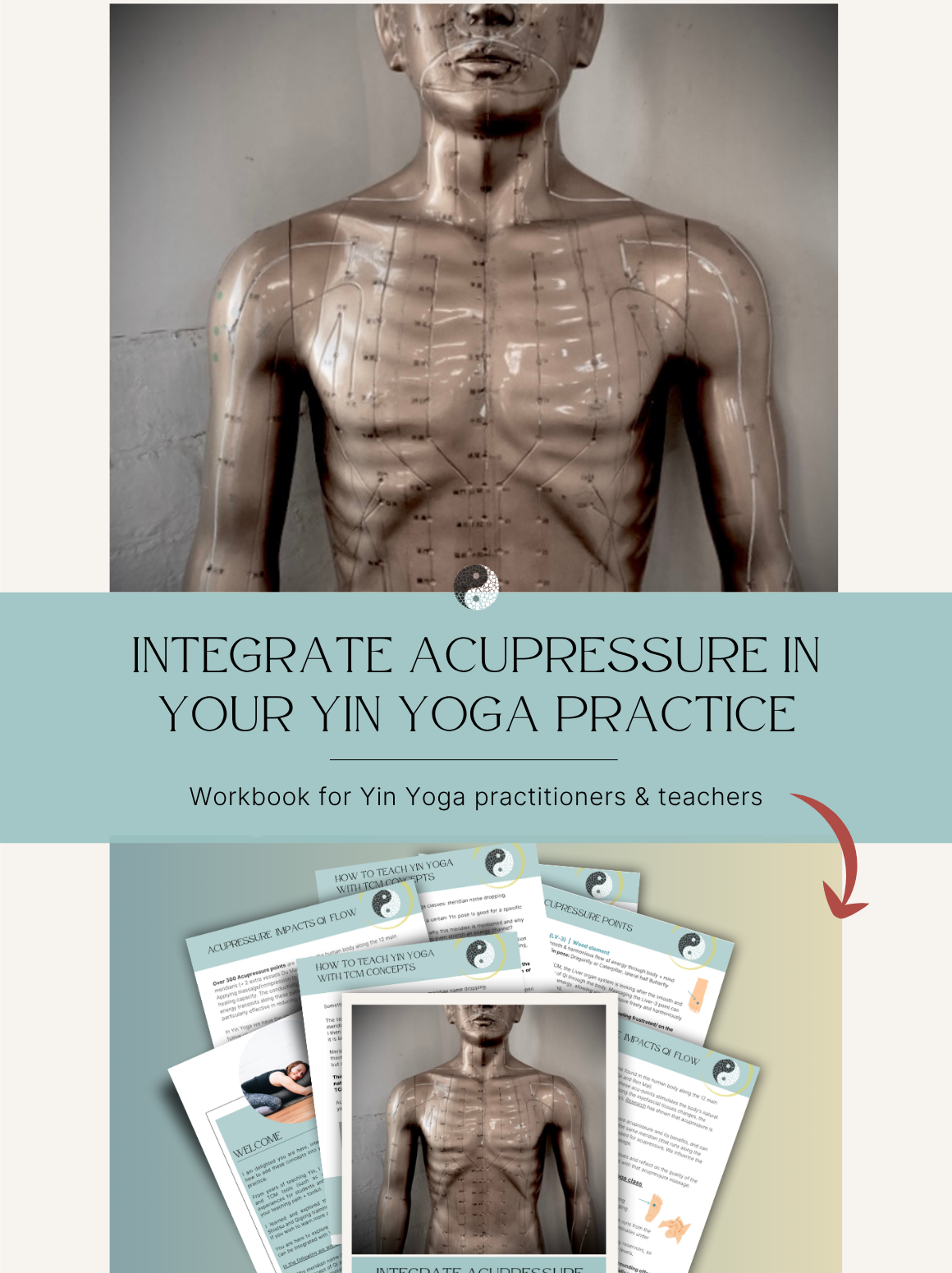
If you’re curious to explore this more deeply, I’ve created two Free workbooks: one on fascial release in Yin Yoga and one on integrating acupressure that expand on these ideas.
Working With Fascia and Energy Together
By placing a ball on specific acupressure points and allowing the body’s weight to yield, perhaps adding subtle rocking, we combine:
Mechanical stimulation of myofascia: helps with hydration of fascia, reduces stiffness/tension
Acupressure stimulation: energetic activation of conductivity along a meridian pathway
Nervous system down-regulation through sustained pressure: switch to rest and digest
Yin exploration: MFR turns into acupressure
This approach works so well with Yin Yoga as we already apply time, stillness and gentle stress to fascial tissues.
Here are three of my favourite MFR & Acupressure combinations to explore in your own practice or teaching:
1. Kidney 1 – Grounding the System
Set-up:
Stand or sit and place a myofascial release ball under the sole of the foot, focusing on Kidney 1 (just behind the ball of the foot, in the center line). Apply gentle pressure leaning into the ball, the heel stays down. Option to slightly wind screen wipe the foot and also roll along the length of the plantar fascia.
After one side, feel into your two feet- can you sense a difference?
From here I like to transition into a forward fold (dangling) to gently open the whole back line of the body.
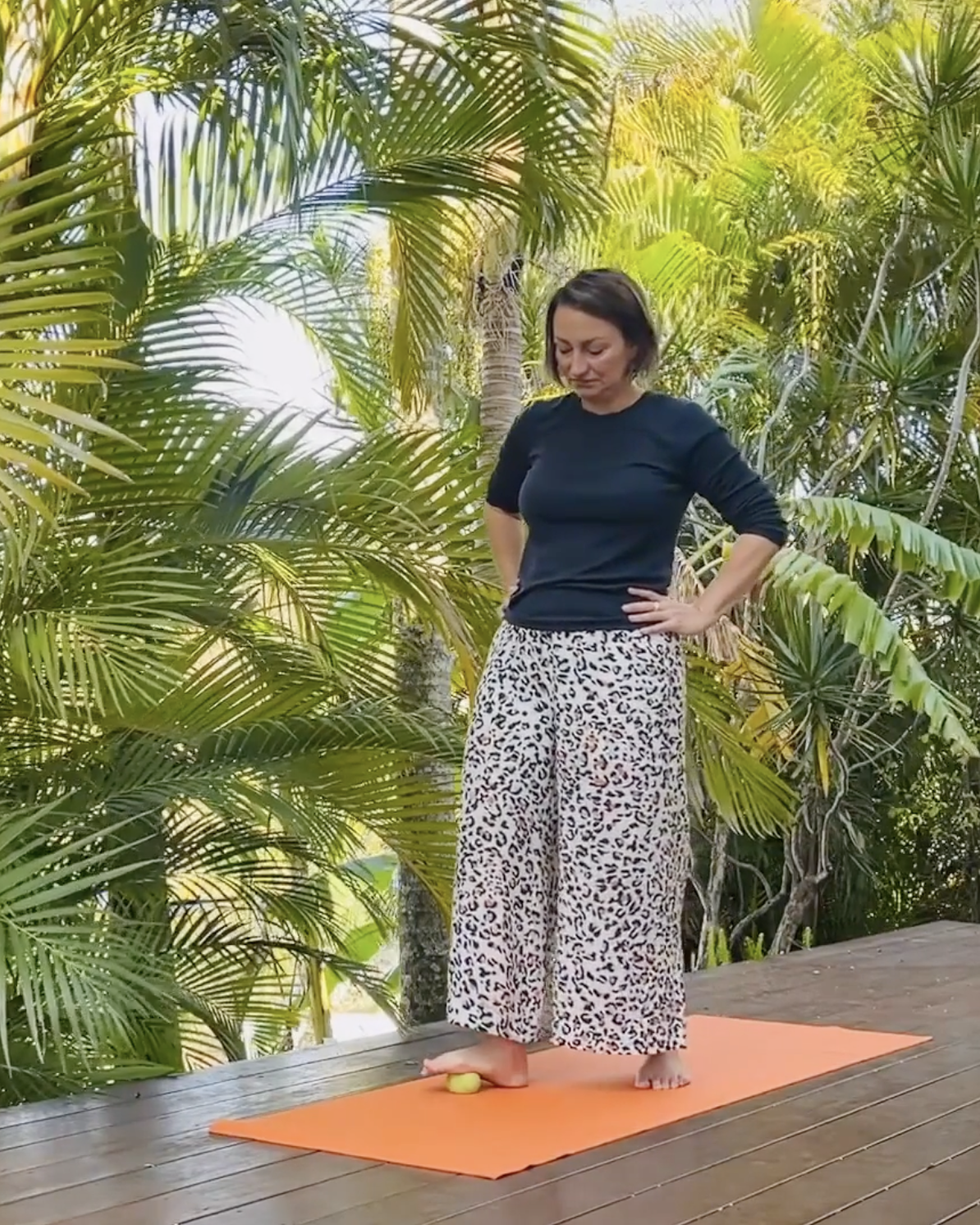
Why it resonates in Yin:
Kidney 1 is known as the “bubbling spring”—a point that draws energy downward and supports grounding. Stimulating this point while releasing the plantar fascia can feel like plugging back into the earth.
The forward fold then invites the entire posterior chain (where we find the Bladder meridian line) to respond, often deepening the sense of release and introspection whilst staying rooted to the earth, Kidney-1 points grounding you down.
2. Gallbladder 20 – Softening the Neck, Clearing the Mind
Set-up:
Lie on your back and place one or two yoga block(s) at the base of the skull, where it meets the neck.
Let the weight of your head be fully supported, chin might gently lower to the chest. Stay still or introduce gentle rolling to the right and left.
NOTE: this is contraindicated in pregnancy!
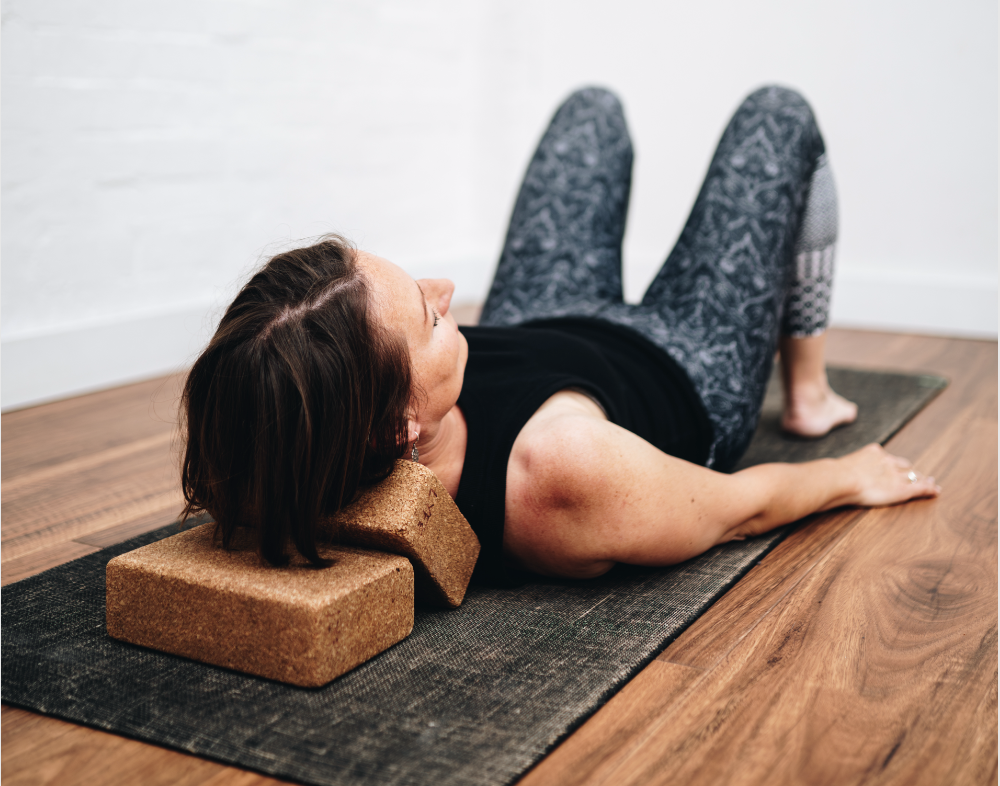
Why it resonates in Yin:
Gallbladder 20, or Wind Pool, is a potent point for releasing accumulated tension, both physical and mental. It’s often associated with clearing the internal wind, easing headaches and releasing overstimulation.
From a fascial perspective, this area connects into the superficial back line, making it a key gateway for releasing tension patterns from hunched forward position and holding tension whilst looking into screens (too much!).
3. Lung 2 – Opening the Chest, Lifting the Mood
Set-up:
To apply MFR on Lung-2, lie prone and place a ball (supported by a rolled blanket) into the deltopectoral triangle (shown on image), the soft space between the chest and shoulder.
I suggest to take your arm out to the side, possibly with a bend elbow and the head turned. Allow your weight to gently rest into the ball and breathe.
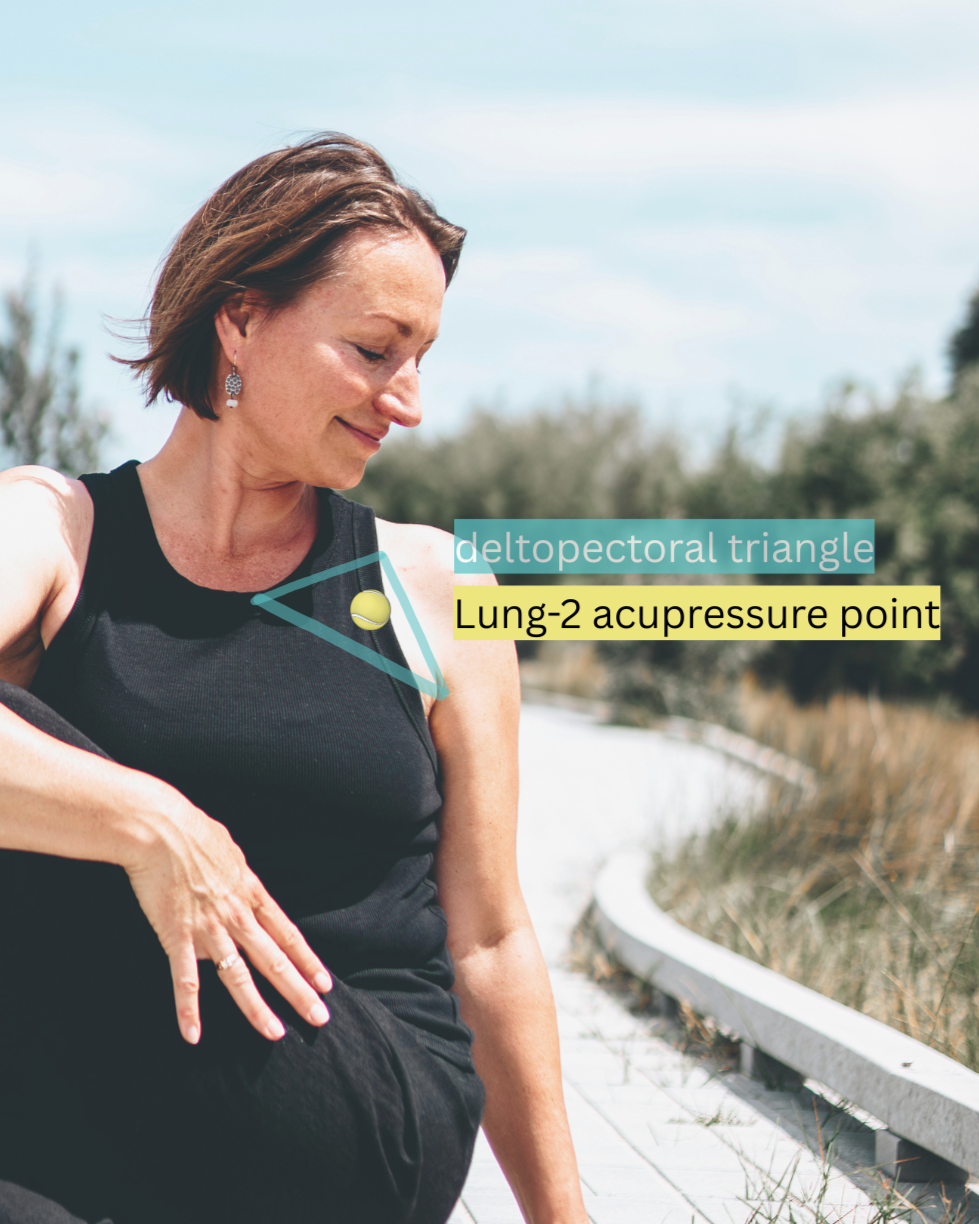
Why it resonates in Yin:
Lung-2 acupressure point, known as Cloud Gate, is deeply connected to breath, the emotion of grief and emotional processing in general. This area often becomes dense with postural and emotional holding.
In a Yin context, this work can feel like creating space not just in the chest, but in one’s inner landscape, space between the overloaded mind, often accompanied by a subtle lifting of mood and breath capacity.
Integrating myofascial release into Yin Yoga (whether that is on acupressure points or not) is not about adding more, it’s about refining awareness.
If you would like to dive into this exploration, start with my Free Workbooks on Myofascial release for Yin Yoga or Acupressure for Yin Yoga and try this on your body:
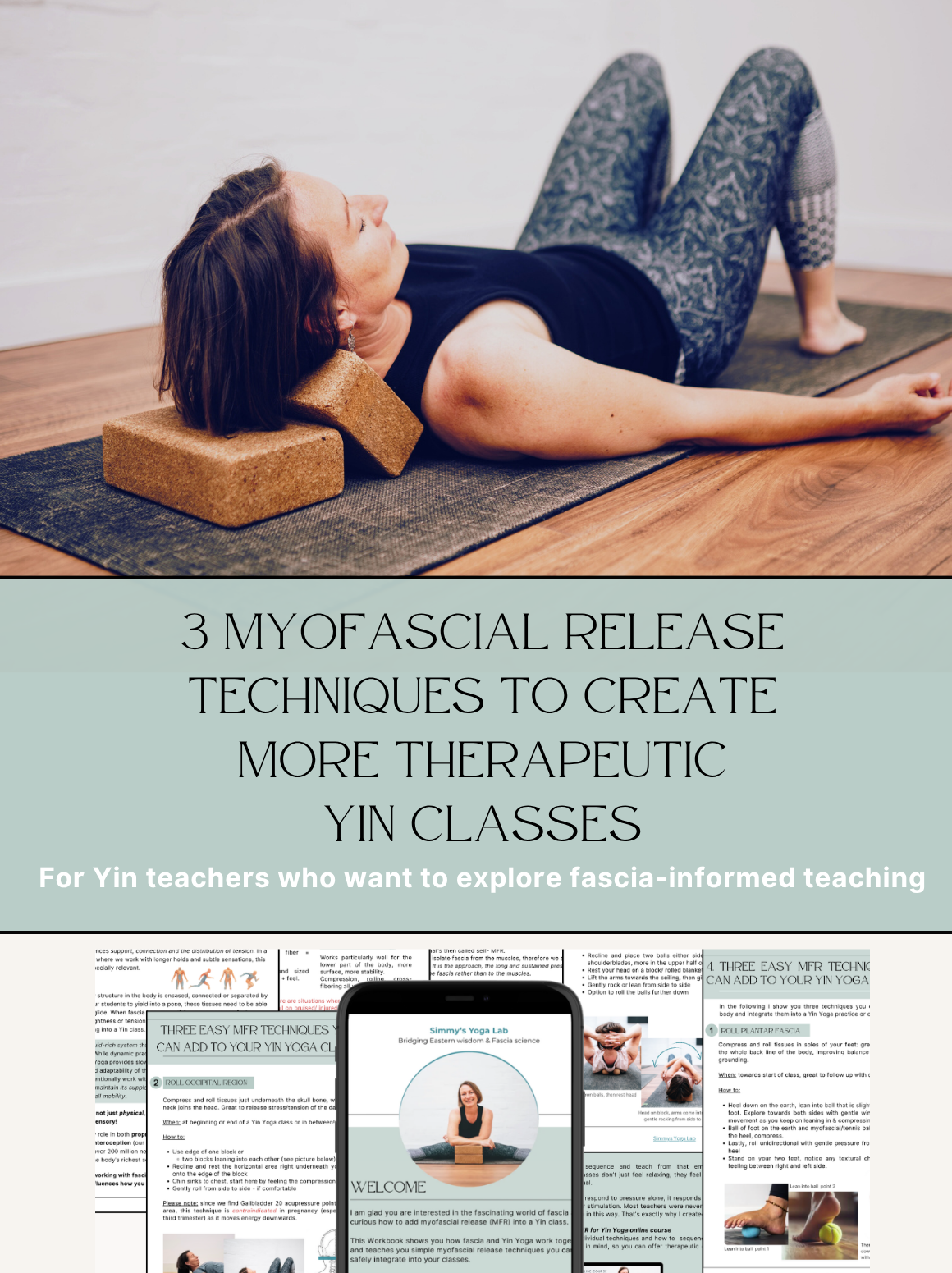
Take good care of your energy and maybe you integrate this into your Yin practice or teaching?!
Best, Simone x
References:
1 - Langevin HM, Yandow JA. Relationship of acupuncture points and meridians to connective tissue planes. Anat Rec. 2002. doi: 10.1002/ar.10185.
2- Anatomy Trains, Edition 4. Myofascial Meridians for Manual Therapists and Movement Professionals By Thomas W. Myers. Publication Date: 12 May 2020
3 -Bai Y et al. Review of evidence suggesting that the fascia network could be the anatomical basis for acupoints and meridians in the human body. Evid Based Complement Alternat Med. 2011. doi: 10.1155/2011/260510.